725 Fifth Avenue, 23rd Floor
New York, NY 10022
There’s a tension at the heart of America’s industrial power. Much of the nation’s military and economic might is built around critical resources not produced sufficiently at home.
Imports account for more than two-thirds of the rare-earth compounds and metals consumed in the US, according to the US Geological Survey. These compounds are needed for critical defense and energy technologies as well as advanced manufacturing.
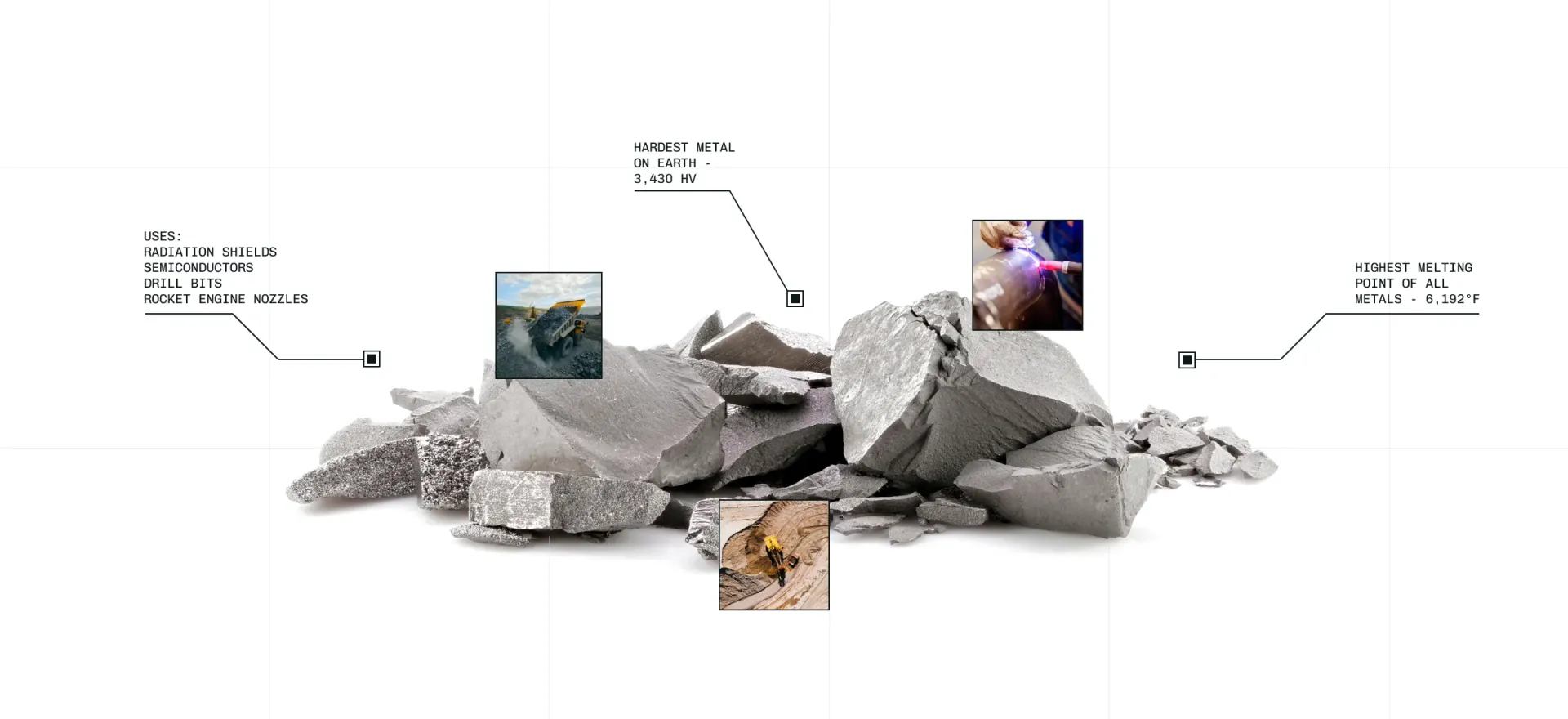
Few materials expose that vulnerability more clearly than tungsten. Tungsten’s density and resistance to heat make it central to weapons systems, semiconductor chips, aerospace components, electronics and nuclear technologies.
Despite the importance of the metal, the US has not mined tungsten commercially since
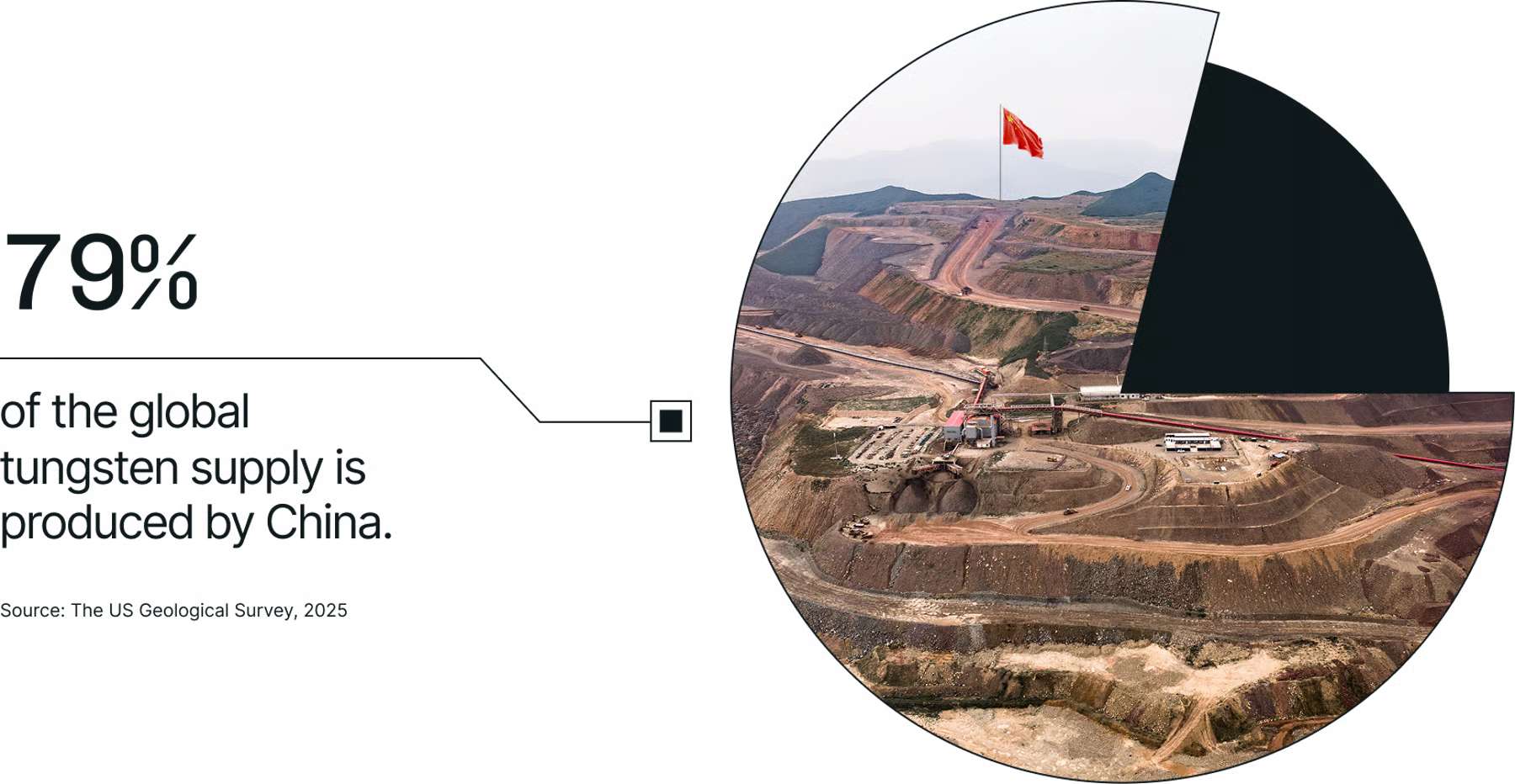
2015 — and instead has depended heavily on China.
The forces driving the tungsten supply squeeze
China’s control of the tungsten supply chain poses a growing strategic risk, and gives Beijing considerable influence over the metal's availability and pricing.
In 2025, for instance, China imposed strict export controls on tungsten in retaliation for US tariffs — and, since then, benchmark prices for the metal more than doubled.
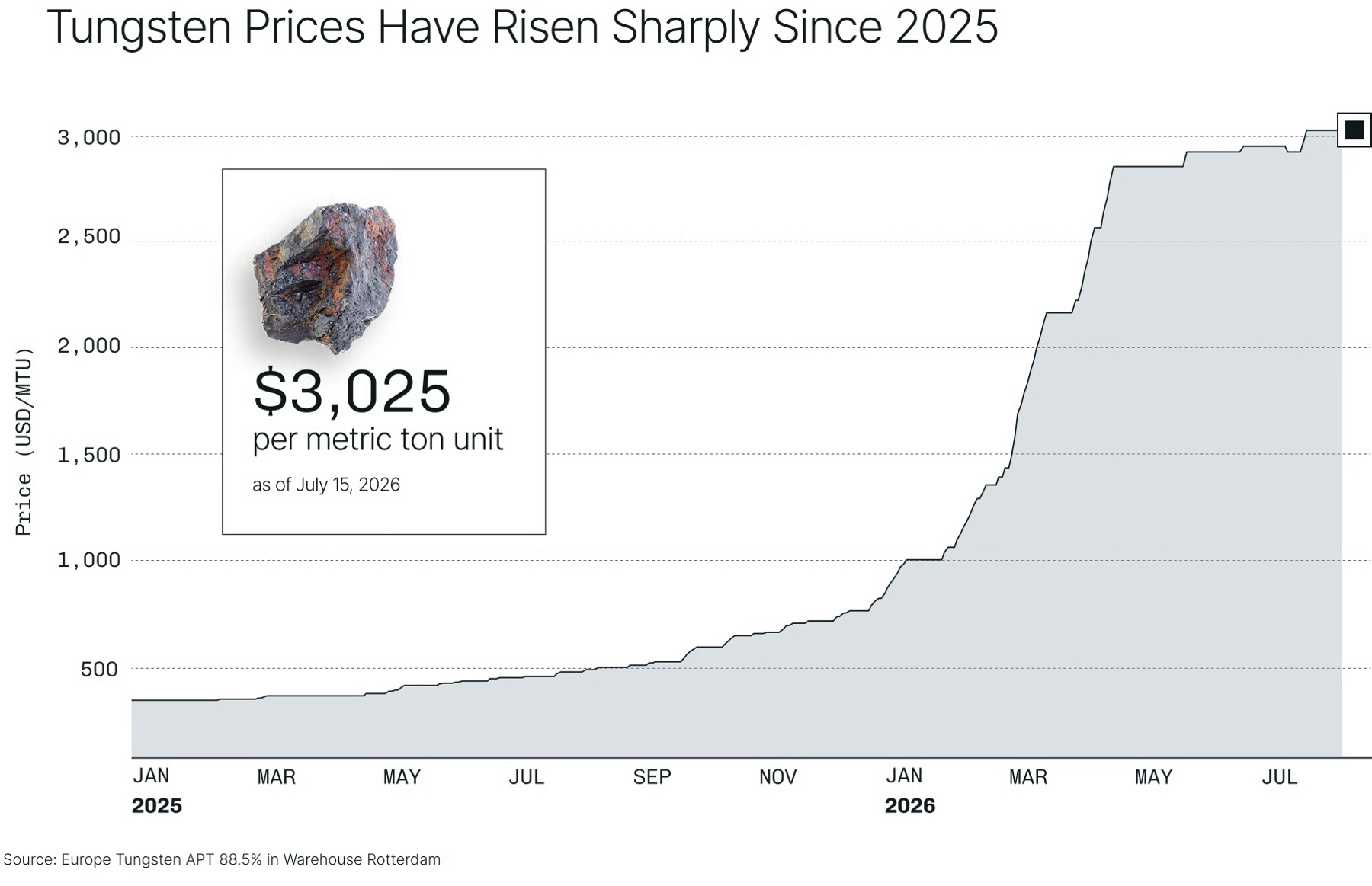
Global investors have taken note of this parabolic rise in the price of tungsten. An example is Almonty Industries (Nasdaq: ALM), which has seen its share price rise from under $1 per share at the end of 2024 to over $14 per share as of July 23, 2026.
At the same time, the Trump administration has secured commitments from defense contractors to ramp up production and replenish weapons stockpiles — an effort that will increase demand for tungsten. Adding to the pressure, a long-planned federal restriction taking effect in 2027 will prohibit contractors from sourcing Chinese tungsten.
“The need for tungsten has just become extraordinary, not just in the US, but around the world. I would call it a perfect storm,” says Pini Althaus, CEO of mining investment and development firm Kaz Resources. “Beijing’s export restrictions and the Pentagon’s ban on certain Chinese products mean this reliance on China is no longer feasible.”
To fill that gap, Kaz Resources, a soon-to-be Nasdaq-listed business set to trade under the ticker KAZR, was recently announced through the merger of Cove Kaz Capital and Skyline Builders. The company is working to reduce China’s dominance in critical minerals by developing alternative supply partnerships, notably in Kazakhstan.
As the first US business to secure critical mineral exploration licenses in the country, KAZR is now actively accelerating the development of two major tungsten deposits, which together the company says form one of the world’s largest undeveloped tungsten resources.
Why Kazakhstan could break Beijing’s tungsten dominance
Lower costs and lighter environmental regulation have historically made China the dominant global supplier of critical minerals, allowing Western economies to meet their needs without building meaningful capacity of their own. That model is starting to falter.
Not only have export controls narrowed access, declining ore grades and rising extraction costs are putting further strain on China’s own tungsten sector. Demand is also being driven higher by global conflicts, where tungsten used in munitions cannot easily be recovered and returned to the recycling stream.
In the search for new sources, Kazakhstan — and KAZR’ projects — offers a rare combination of scale, experience and political alignment. The country is rich in mineral resources, has a mature mining industry dating back to the Soviet era, and maintains long-standing commercial ties with the US through oil, gas and uranium.

Dominari Securities provides clients access to products and services offered through bank and non-bank affiliates.
Securities and Registered Investment Advisory Services offered through Dominari Securities, LLC, an SEC registered investment advisor and broker-dealer. Member, FINRA, MSRB and SIPC.
Securities, brokerage, investment advisory and other non-deposit investment products: Are not FDIC insured - Are Not Bank- Guaranteed - May Lose Value, Including The Principal Invested. Check the background of Dominari Securities and our investment professionals on FINRA’s Broker Check.
Check the background of Dominari Securities and our investment professionals on FINRA’s Broker Check.
We’re here to help you navigate the complexities of modern finance. Reach out today to begin a conversation that could shape your financial future.

725 Fifth Avenue, 23rd Floor
New York, NY 10022

(212) 393-4500
(800) 299-7618

info@dominarisecurities.com
©2025 Dominari Securities LLC | All Rights Reserved.